

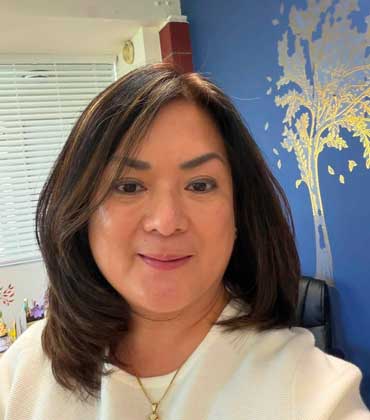
 Monet Montclaire, Ph.D., Principal
Being a principal comes with many responsibilities. There are schedules, staffing, enrollment, parent concerns, teacher development, policies, unexpected situations and decisions that have to be made every day. Some decisions are easy. Others require careful thought and courage.
But through my years as a Montessori principal, I have learned that leadership is not simply about making decisions or being the person in charge.
Leadership is about serving the people entrusted to you.
Montessori has influenced the way I lead in ways I never expected. In the classroom, we do not simply tell children what to do. We prepare the environment, observe, guide, encourage independence and step in when support is needed. As a principal, I have learned to apply many of those same principles to my leadership.
I have learned that I cannot lead everyone in the same way. Every teacher is different. Every child is different. Every family has a different story.
Sometimes a teacher needs encouragement. Sometimes a teacher needs honest feedback. Sometimes a parent needs reassurance. Sometimes a child simply needs someone to slow down and observe before deciding what to do next.
That is where I believe the heart of Montessori leadership begins: observation before reaction.
There have been many moments in my career when my first instinct was to immediately solve a problem. Experience, however, has taught me to pause and listen first.
When a teacher comes to me frustrated, I try to understand what is behind the frustration. When a parent expresses a concern, I try to hear not only the words but also the worry behind them. And when a child is struggling, I remind myself that behavior is often communication.
Listening does not mean that every concern will result in the outcome someone wants. It means that every person deserves to feel heard and respected.
As a principal, I have also learned that kindness and accountability must exist together.
It is easy to think that being a compassionate leader means avoiding difficult conversations. I have learned that it is actually the opposite. Sometimes caring about a teacher means having an honest conversation about expectations. Sometimes protecting the school community means making an uncomfortable decision. Sometimes being fair means saying no.
Leadership requires courage, but courage does not have to be harsh.
I believe you can hold people accountable while treating them with dignity. You can have high expectations while still being understanding. You can make difficult decisions without losing compassion.
That balance is something I continue to learn every day.
One of my greatest responsibilities as a principal is supporting teachers. A beautiful Montessori classroom does not happen by accident. Behind it is a teacher who prepares, observes, plans, adapts and gives tremendous energy to the children.
Teachers need more than instructions. They need to feel valued, opportunities to grow and someone who will encourage them when they are doing well and guide them when they need improvement.
Supporting teachers also means recognizing that leadership is not about creating a team that simply follows directions. It is about creating a team that understands the purpose behind what we do. When teachers understand that our decisions are ultimately about the well-being and development of the child, they become partners in the vision of the school.
And at the center of that vision must always be the child.
Whenever I face a difficult decision, I return to one simple question: What is best for the child?
That question has guided me through countless situations.
Montessori teaches us that children develop at their own pace. One child may read early, while another needs more time. One may confidently enter the classroom on the first day, while another needs a week of reassurance. One may express themselves easily, while another communicates through behavior.
Our responsibility is not to make every child fit the same mold. It is to understand the child in front of us.
I believe leadership should follow the same principle. We should not expect every teacher, family or situation to fit one formula. Good leadership requires observation, flexibility, patience and understanding.
Over the years, I have learned that some of the most meaningful moments of leadership are the ones nobody notices:
• Greeting a child who needs a little extra encouragement.
• Sitting with a teacher who has had a difficult day.
• Answering a worried parent’s message late in the afternoon.
• Noticing something that needs attention before it becomes a bigger problem.
• Admitting when I am wrong.
• Celebrating a small improvement that others might not notice.
These moments rarely make it onto a principal’s list of accomplishments. But they are leaders.
I often think of Montessori leadership as gardening. A gardener cannot force a flower to bloom. The gardener prepares the soil, provides the right environment, gives it water and sunlight, protects it from harm and waits patiently for it to grow.
Children need that kind of environment. Teachers do too.
As a principal, I cannot force someone to grow. But I can create the conditions that make growth possible. I can encourage, guide, provide opportunities, give honest feedback and allow people the space to develop. That is the kind of leader I strive to be.
-
Lead with the Heart: What It Means to Be a Montessori Principal.
I also remind myself that leadership begins with example. If I want my teachers to be patient, I have to demonstrate patience. If I want kindness in my school, I have to show kindness. If I expect professionalism, I must model it. If I expect my teachers to continue learning, I must continue learning myself.
Children are watching us. Teachers are watching us. Our families are watching us. The culture of a school is shaped not only by its policies, but by what its leaders consistently model.
After years of being a Montessori principal, I have learned that leadership is not about having all the answers. It is about being willing to keep learning.
Some days, I leave school feeling that everything went exactly as planned. Other days, I leave knowing there is still much more to do. But every day gives me another opportunity to learn something, whether it is understanding a child better, supporting a teacher, strengthening a relationship with a family or becoming a better leader.
That is the privilege of leading a Montessori school.
Every morning, the doors of Casa Montessori open again. Children arrive ready to discover. Teachers arrive ready to guide. Families place their trust in us. And I walk through those doors reminded of the responsibility that comes with being a principal.
I may have the title of principal, but my role is much bigger than the title. I am a leader, but I am also a listener. I am an administrator, but I am also an observer. I am responsible for the school, but I am also part of its community.
Above all, I am here to help create an environment where children and the adults who care for them can grow.
Because true Montessori leadership is not about standing above others. It is about standing beside them, guiding them, supporting them and helping them discover what they are capable of becoming.
That is what it means to lead with the heart.